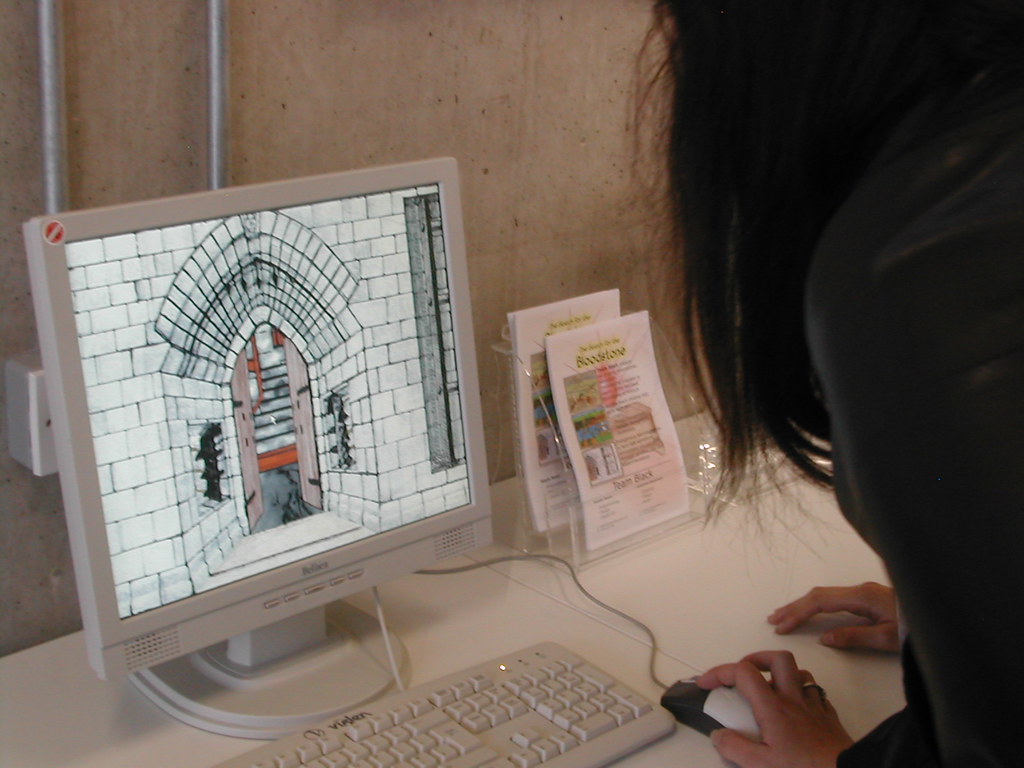
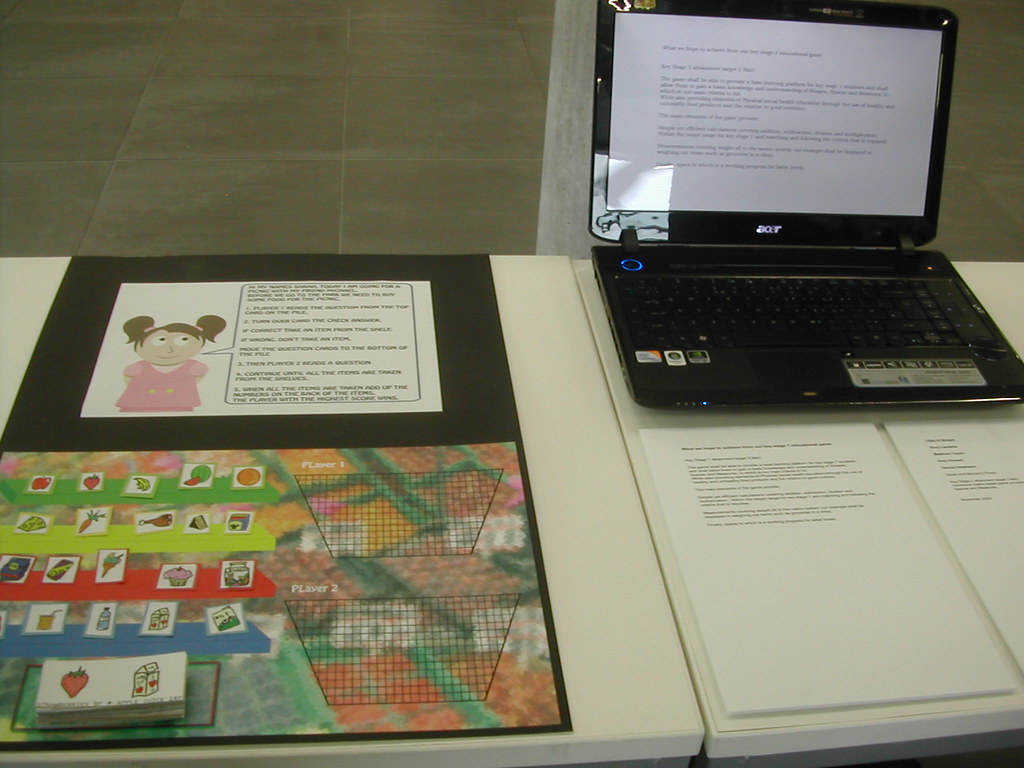
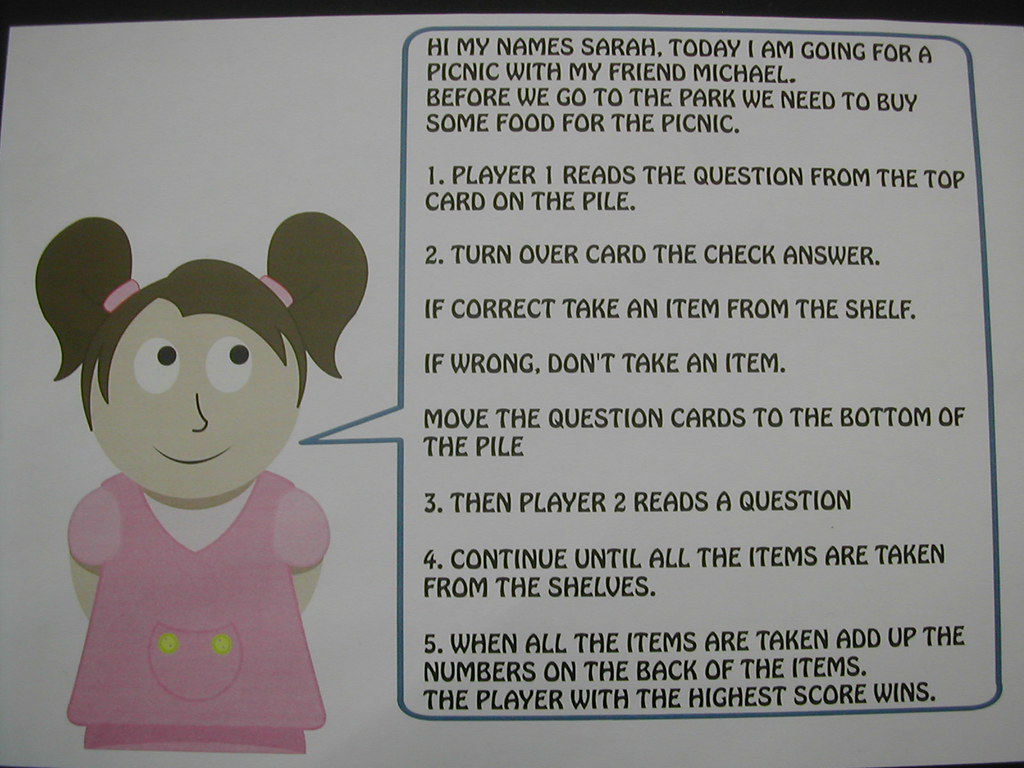
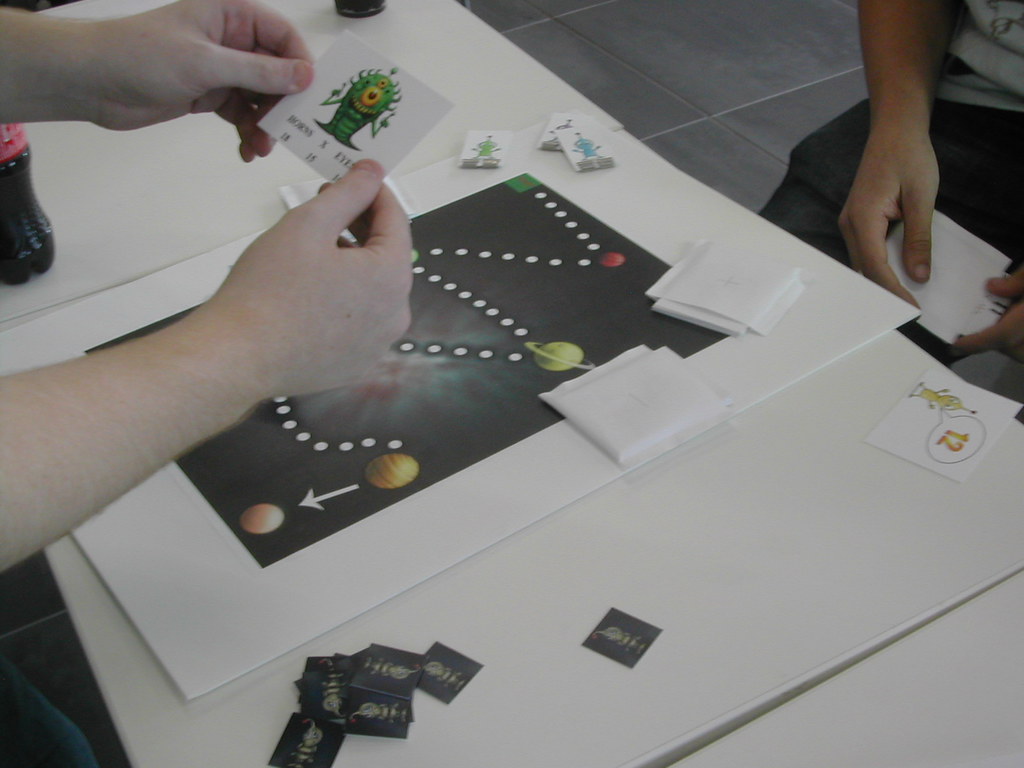
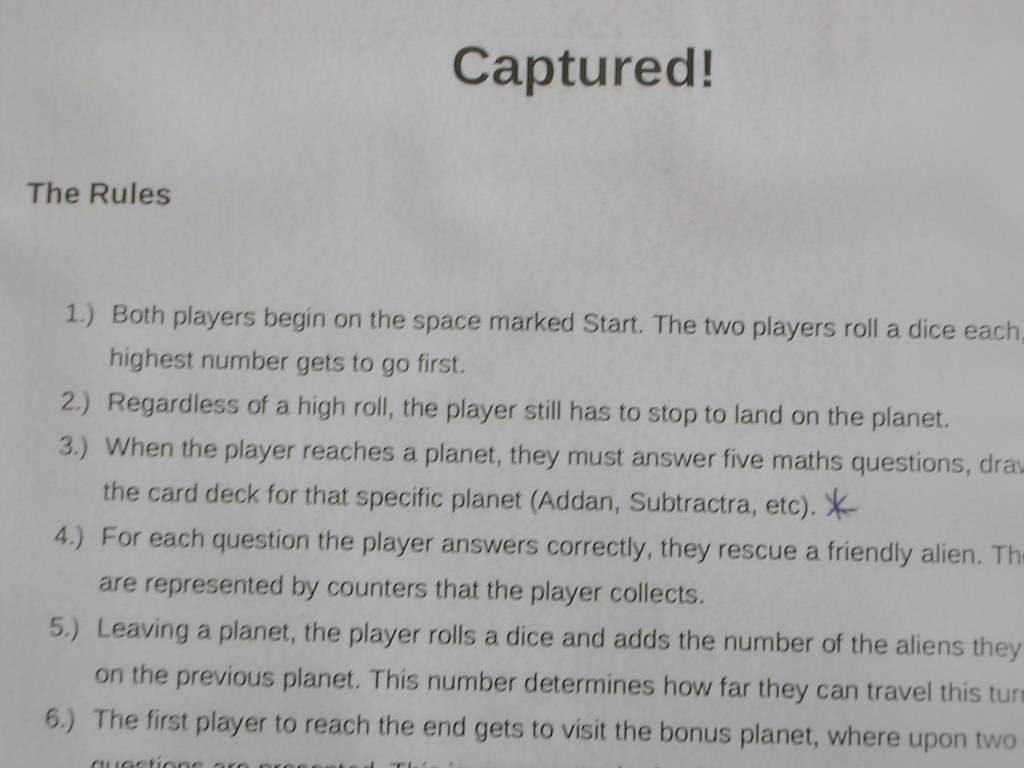
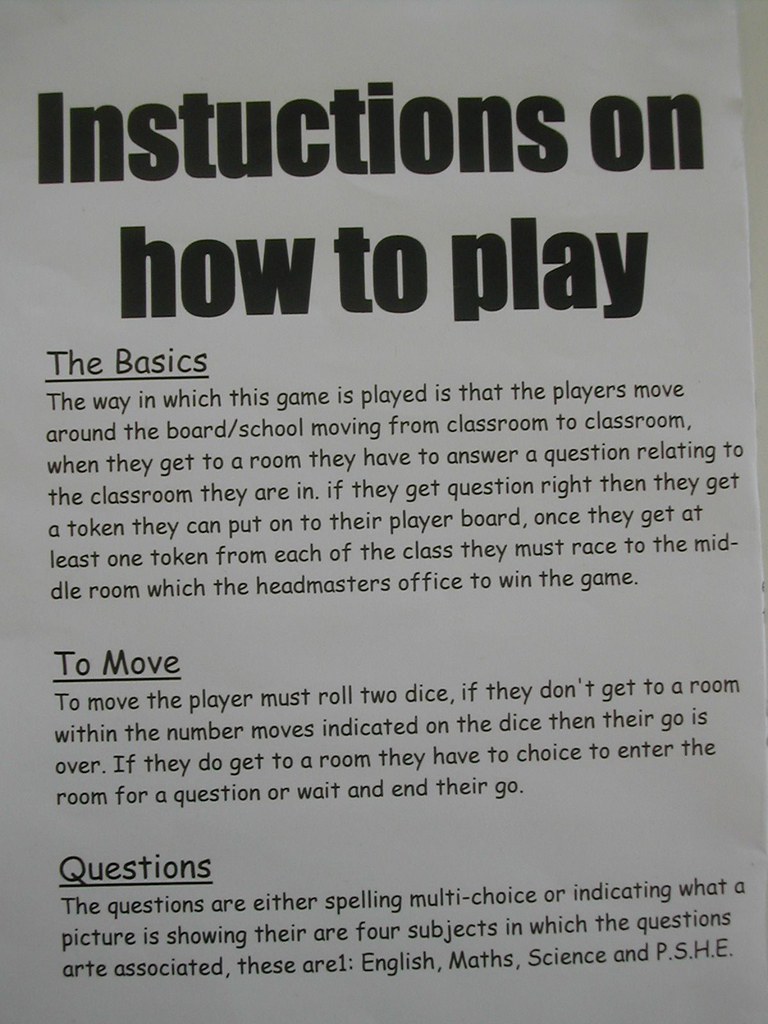
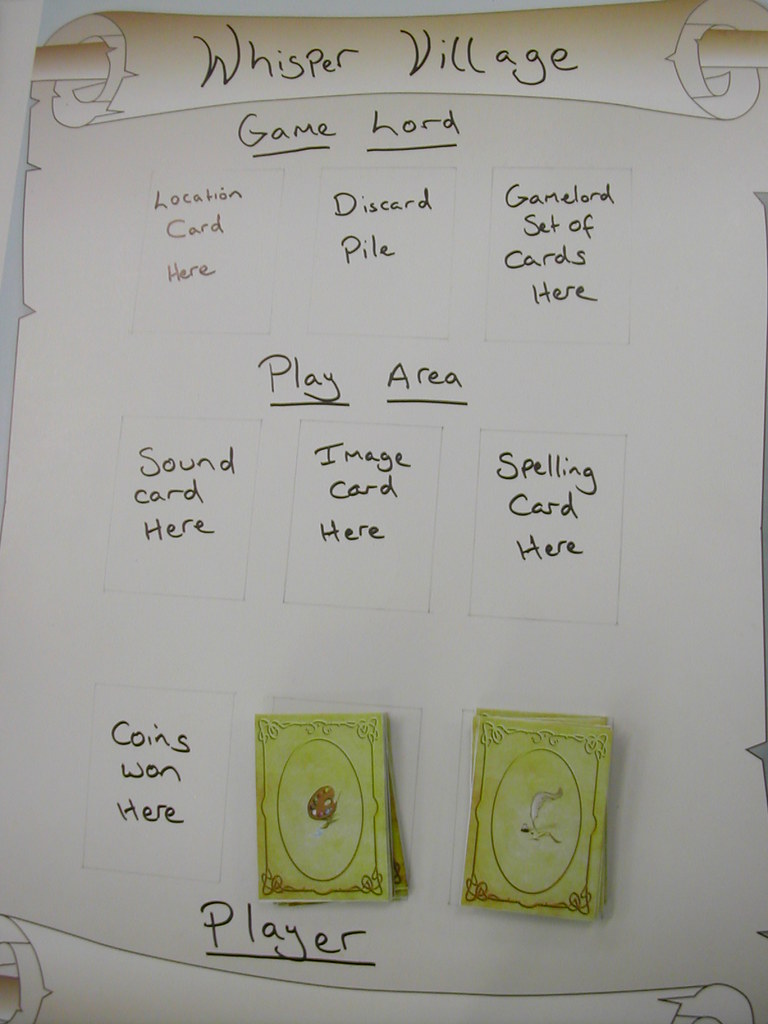
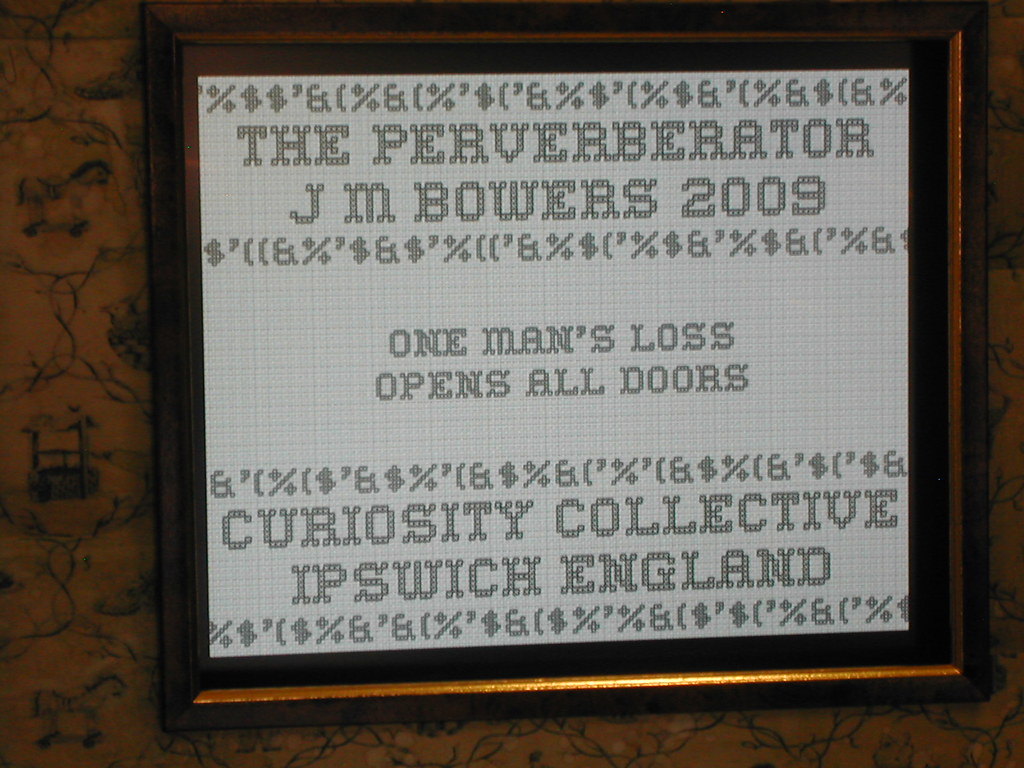
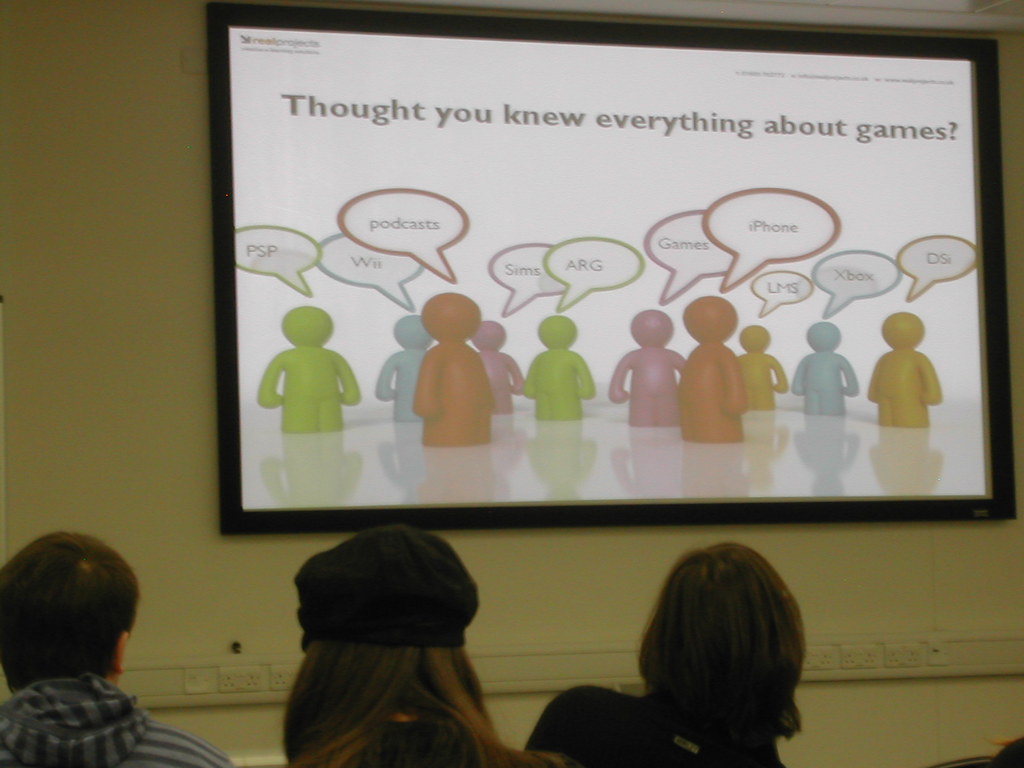
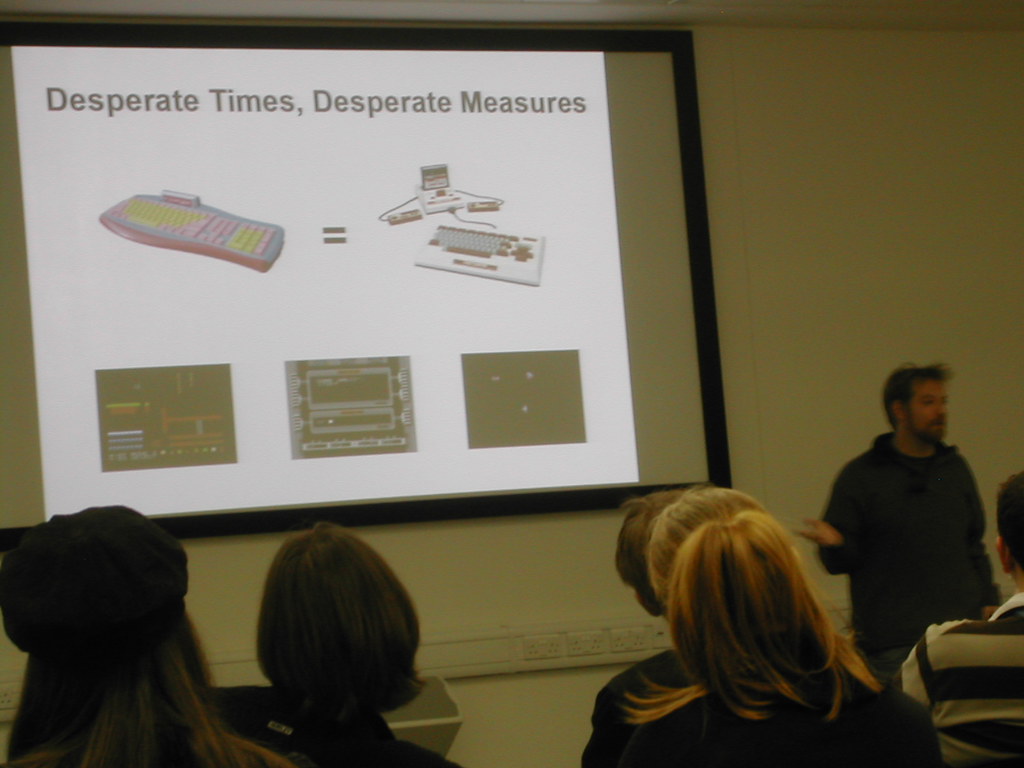
As well as the talks, there were some student games on show, both complete games from some of the L2 and L3 design and programming students, and paper prototypes of games being developed by the L1 Computer Games Design group. The Curiosity Collective were showing some of their curios (I liked the proverb generator) and Matthew Applegate had an installation running too.
There was a great turnout, interesting speakers and a nice set of prototypes of student games on show at the today's Suffolk eLearning event.
Scott Hewitt of RealProjects kicked off the talks with an overview of the development of elearning, from screen -> screen -> test type-scenarios to current developments that make use of 3D game engines, not to mention a variety of portable devices, including familiar pocket-fillers such as the Nintendo DS, Sony PSP and the Apple iPhone, as well as some examples of how Wii-controller technlogy is being harnessed for training and educational use.
Dan Mayers and Adam Mayes's presentation on Alternate Reality Gaming (ARG) was really interesting and thought provoking. I'm not that familiar with the concept of ARG-ing beyond it involving some running around and "doing stuff" IRL, but the presentation suggested how ARG-ing can bring a whole new lease of life to things like field trips and guided walks. There are some great integrational (is that a word?) possibilities, directing users/players to online content--web pages, information, clues, video etc.--using QR codes and mobile phones. Truly fascinating stuff.
Adam wasn't physically present--he was in Denmark, so it was great that he took part via Skype with nary a hitch (I've been to several tech-focussed conferences where the inevitable technical hitch leads to non-ironic whoops from the audience after someone gets on stage and manages to get the speaker's Mac to connect to the internet via wifi. Adam's link-up today was so seamless that no-one noticed or, if they did, they were all too cool to whoop or make a fuss).
There was some concern about Matthew Applegate as his last known contact with the world was a tweet last night to say that he was feeling poorly, but he nonchalantly arrived, bang on time, with a laptop and a carrier bag and talked about the decline of programming in the school curriculum and went on to make some suggestions about some ways people could get coding (eg: scratch, squeak, atmosphir, processing) and he also mentioned some projects that will bring basic--beginner's all-purpose symbolic instruction code--to some popular consoles.
Another nice free thing (with a couple of paid options) is a presentation application called Prezi. It differs from PowerPoint in that it is like a zoomable poster rather than a series of slides of bullet points. Here's a video clip that provides an overview of the key featues:
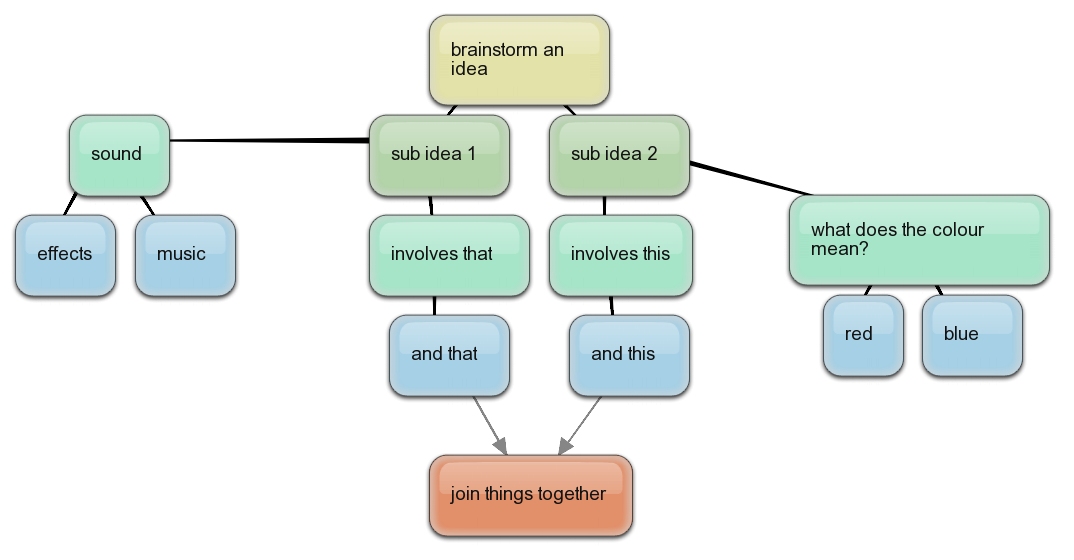
Bubbl.us is free web-based brainstorming application that allows users to:
Create colorful mind maps online
Share and work with friends
Embed your mind map in your blog or website
Email and print your mind map
Save your mind map as an image
Looks like it could be useful for collaborative projects. Click on the little image below to open a bigger Flickr pic to get an idea of what it looks like.
Apparently, Rupert Murdoch is planning to block Google from displaying the content of the various domains he controls. The idea is that people will then pay to access News International sites (there at least two flaws there, but let's overlook them for the sake of convenience).
Anyone who doesn't want to wait that long, if they aren't already doing it, can exclude content from Murdoch's domains by adding a simple filter to their search terms in the form of a minus sign, the word "site" and a colon, followed by the domain to be excluded. For example:
"balanced news" -site:thesun.co.uk
"celebrity obsession" -site:thetimesonline.co.uk
"cross-media promotion" -skynews.com
If excluding individual domains on every search seems a bit tedious, Google offers a custom search engine option: http://www.google.com/cse/. After setting up a custom search engine, it's possible to add a list of domains to exclude.
The mobile gaming market is looking increasingly erm ... mobile. While established mobile platforms from Sony and Nintendo are currently being eclipsed by johnny-come-lately handhelds in the form of the iPod Touch and the iPhone, Google's Android OS may be about to cut a swathe through mobile market and upset the Apple iCart as Android 2 includes free sat nav.
The new Nintendo DSi, which incorporates features commonly found in mobile phones in an attempt to make the platform more appealing and stem the loss of sales, is already redundant as Nintendo prepare to launch the DSi XL in the spring. The XL is a thicker, heavier version of the DSi, with larger screens and bundled apps (see this brief games news piece from yesterday's Games Review in The Guardian's Guide supplement). A visual comparison of the DSi and the DSi XL can been seen in this Wired article. According to this BBC news story, Nintendo DS sales have dipped by 15% over the last year while, in the same period, sales of iPhone and iPod touch have doubled. (That BBC news story, which moots Android 2 as a threat to Nintendo, Sony and Apple, also contains a nice video clip of Android's satnav running on a Motorola Droid but, irritatingly, the video clip isn't embeddable.)
Sony's response to the stiff competition was to restyle the niche PSP as the overpriced PSP Go (at £225, it's almost the same price as a £250 PS3) and introduce "Minis" -- downloadable games at affordable prices. (Click on the image for an insightful review of the PSP Go at ArsTechnica.)
The rise in downloadable content for handhelds may be the beginning of the end of content on a chip in a plastic box, as the overheads and distribution costs are considerably less. This is likely to have a trickle-down effect on the high street for box-based retailers like Game, and also an effect on the second hand market. Just how does one sell-on a download when you've finished with it? What do the people who rent you games games publishers think of the whole second-hand thing anyway? See, for example: Sony's Clampdown on second-hand games; Second-hand games sales are "a huge issue" -- Epic
On a less fraught front, the open source handheld market, specifically the GP2X, is keeping up with developments too, in the form of the GP2X Wiz, available at an affordable £129. There's a five minute video showcasing the Wiz's capabilities below:
Another open source development is the intriguing Pandora. It looks like a great device: a cross between a handheld console and pocket version of the netbook. It looks like a great device for developers and fiddlers, especially as the technical specs refer to an "un-brickable design with integrated boot loader for safe code experimentation". It has a TV-out (composite and S-Video) but not, apparently, a VGA port. The Pandora isn't quite available everywhere yet, but can be had for $330 from limited outlets. Check out the specs on the Pandora website, or see the preview video below.
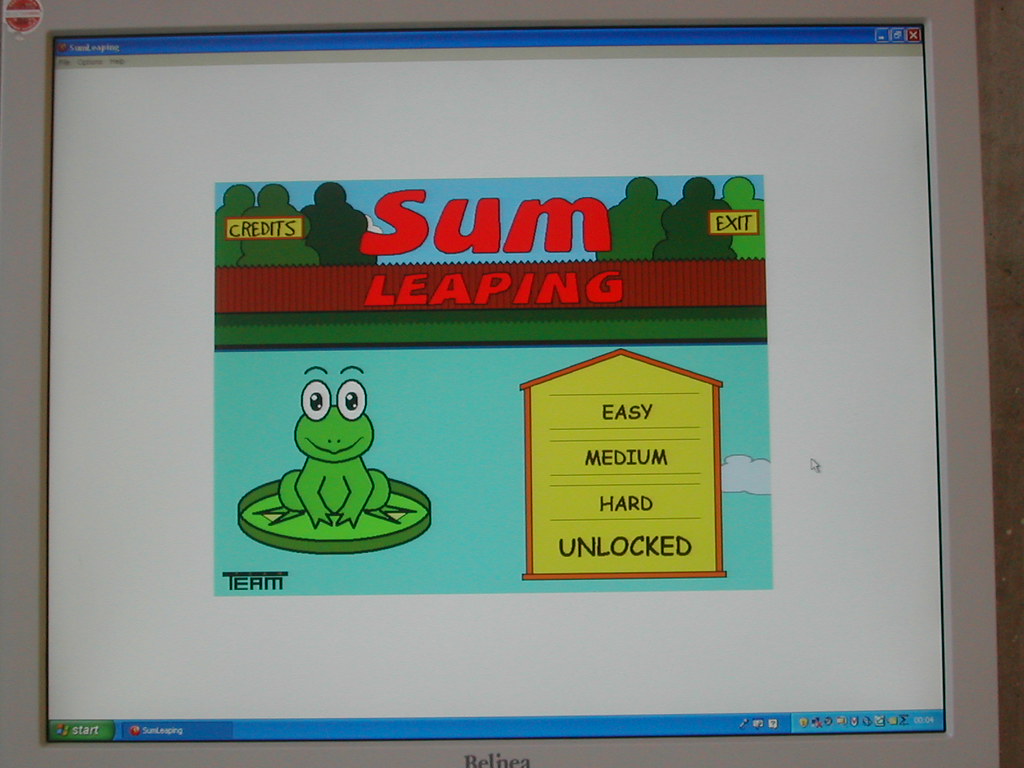
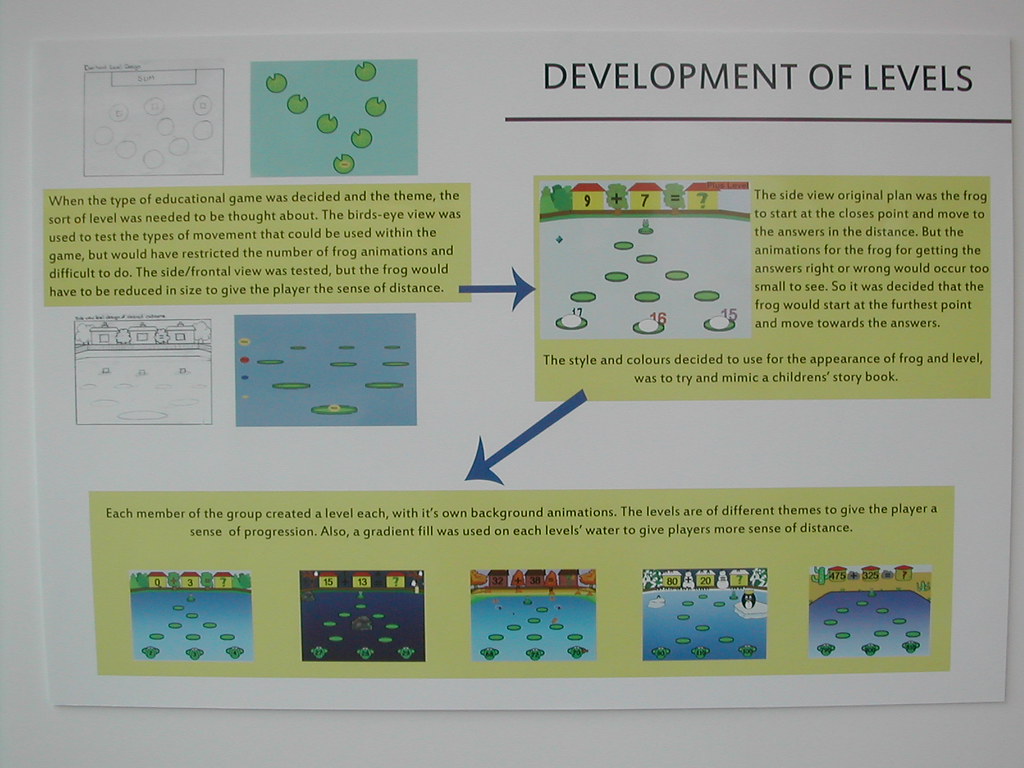
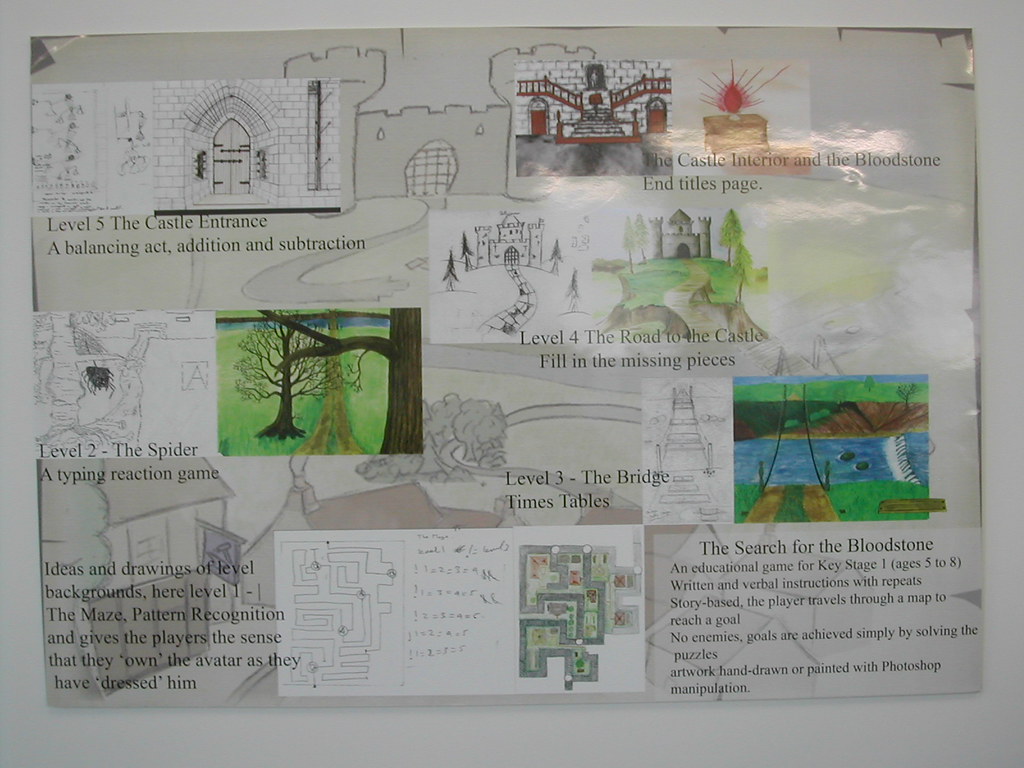
Some of the level three students on the Computer Games Design and Computer Games Programming courses will be showing some of their key Stage 1 games at the forthcoming Games-Based Learning event to be held at the UCS Waterfront building, 2.00-5.00 on 11th November 2009 in collaboration with Real Projects. Student games on show include Bloodstone, Sum Leaping and Music Man. Additional information about the event can be found on the Suffolk eLearning Forum website.
Some of the level one Computer Games Design students are preparing paper prototypes for the event. I've had a sneak preview of some of the artwork and it's incredibly good. The other thing that's stunning is that the level one students have only been on the course for six weeks and they are getting stuck-in to the development of their games for Key Stage 1 (that's for children aged between five and seven for anyone unfamiliar with the terminology of primary education in the UK). When the level one students' games have been finished, they will be exhibited at a different event.
-
Atari ST ASMR: 15 Well Crafted STOS Action Arcade Games Today we are going
to cover 15 Well crafted Action arcade titles for the Atari ST and STE.
This wi...
Bloomberg Terminals in repose
-
[image: An early 90s terminal. Photo: National Museum of American
History/Smithsonian Institution]
Back in the day, when writing on the Internet was new an...
Train2Game and TIGA
-
Train2Game are one of those odious companies which threaten legal action
every time they are criticised or their business practices are put under
scrutiny....
Strange Games
-
After I had agreed to organise the 2014 Board Game Studies Colloquium at
UCS, it dawned on me that I probably ought to contribute a paper to the
event.
...
Maker Faire UK 2014
-
[image: image]
We were back at the Maker Faire in Newcastle for our forth time - we were
there at the first in 2009 with our proverbs, we walked in 2010,...
RobotBASIC: A STEM-focused Progamming Language
-
I’ve been talking with John Blankenship on LinkedIn about RobotBASIC, which
allows students to control robots as well as create simulations and video
games...
KL Bubble Pop
-
Enjoy a vibrant and relaxing casual arcade experience for everyone.
Colorful balloons travel upwards from the bottom center of the screen. Your
primary go...
Tiltfactor Research Has Impact
-
Did you know that our recent construal research is used by corporations
like Samsung as they consider digital vs paper virtues? Or that game design
teacher...
Moviestorm operatic feature film showing
-
An update on Libertaria the Virtual opera by Sabrina Pena Young.
The film will be shown at Opera America in NYC on November 4th ... in case
you are in the a...
Bike Alert wins Guardian reader award
-
Back in November I was asked to be one of the “cutting edge” developers at
the Power of Minds Hack with Honda, organised by Rewired State, in one word
it w...
Recommended posts, 2017-2025
-
It’s been over five years since the last time I gathered up recommended
posts in one place and added them to the menu above. I figured I was due.
As usual ...
Boxing Cleverer
-
What makes a sport popular - then not? A chat broke out on Twitter. One of
those chats that tells you that Twitter can be a terrible place to chat. So
let'...
Still Here
-
It seems extraordinary that it's 20 years since I started this blog. Where
did the time go?
I have now reached my 60s and seem to be retired. I didn't p...
The Return of High Seas: The Family Fortune
-
Some time ago (that’s 2007), we released High Seas: The Family Fortune. The
thing with software though is that it stops working. But with, well, modern
too...